
How to Talk to Children About Death: 5 Essential Tips

April 3, 2026

Share this article

Talking to children about death requires honesty, simple language, and emotional support. Use clear terms like 'died' instead of confusing euphemisms. Encourage questions, validate their feelings, and provide a safe space for grief. Being open helps children process loss and begin their healing journey with confidence and security.

What is the best way to explain death to a child?

When a family member or a close friend passes away, the natural instinct of many parents in Utah County is to protect their children from the pain of loss. However, research and experience suggest that being direct and honest is the most compassionate approach. How to talk to children about death starts with finding a quiet, familiar place where they feel safe to express themselves without distraction.

Experts recommend following these five steps during the initial conversation:

  • Use simple, concrete language that avoids confusing metaphors.
  • Explain that the body has stopped working and cannot feel pain anymore.
  • Allow for pauses to let the information sink in for the child.
  • Reassure them that they are safe and will be cared for.
  • Validate their emotions, whether they feel sad, angry, or even indifferent.

By providing clear facts, you help prevent the child from filling in the gaps with their own, often more frightening, imagination. If you need further guidance, our team at Berg Mortuary offers grief support resources tailored for families navigating these difficult transitions.

photorealistic gentle father and child talking on a bench outdoors soft warm lighting supportive atmosphere

Guidelines for using age-appropriate language

Children understand the concept of death differently depending on their developmental stage. For toddlers and preschoolers, death is often seen as temporary or reversible, like a character in a cartoon. For school-aged children, the finality of death becomes more apparent, though they may still have many literal questions about the physical process.

It is vital to avoid euphemisms such as "went to sleep," "went on a long trip," or "we lost Grandpa." These phrases can cause significant anxiety; a child might become afraid to go to sleep or confused about why the family isn't looking for the "lost" person. Instead, explain that when someone dies, their heart stops beating, and they no longer breathe or move. This physical explanation helps them grasp the reality of the situation without unnecessary fear.

Should children attend the funeral service?

One of the most common questions we receive at Berg Mortuary is whether children should attend the memorial or funeral service. Generally, children benefit from being included in the rituals of saying goodbye, as it provides a sense of closure and allows them to see how a community supports one another during times of loss.

Before deciding, consider the following:

  1. Preparation : Explain what they will see, hear, and experience at the service.
  2. Choice : Give the child the option to attend or stay with a trusted caregiver.
  3. Support : Assign a specific adult to be with the child to answer questions or leave the room if the child becomes overwhelmed.
  4. Role : If they want to participate, let them place a flower or a drawing near the casket.

You can find more information on funeral etiquette to help prepare your family for what to expect during different types of service offerings .

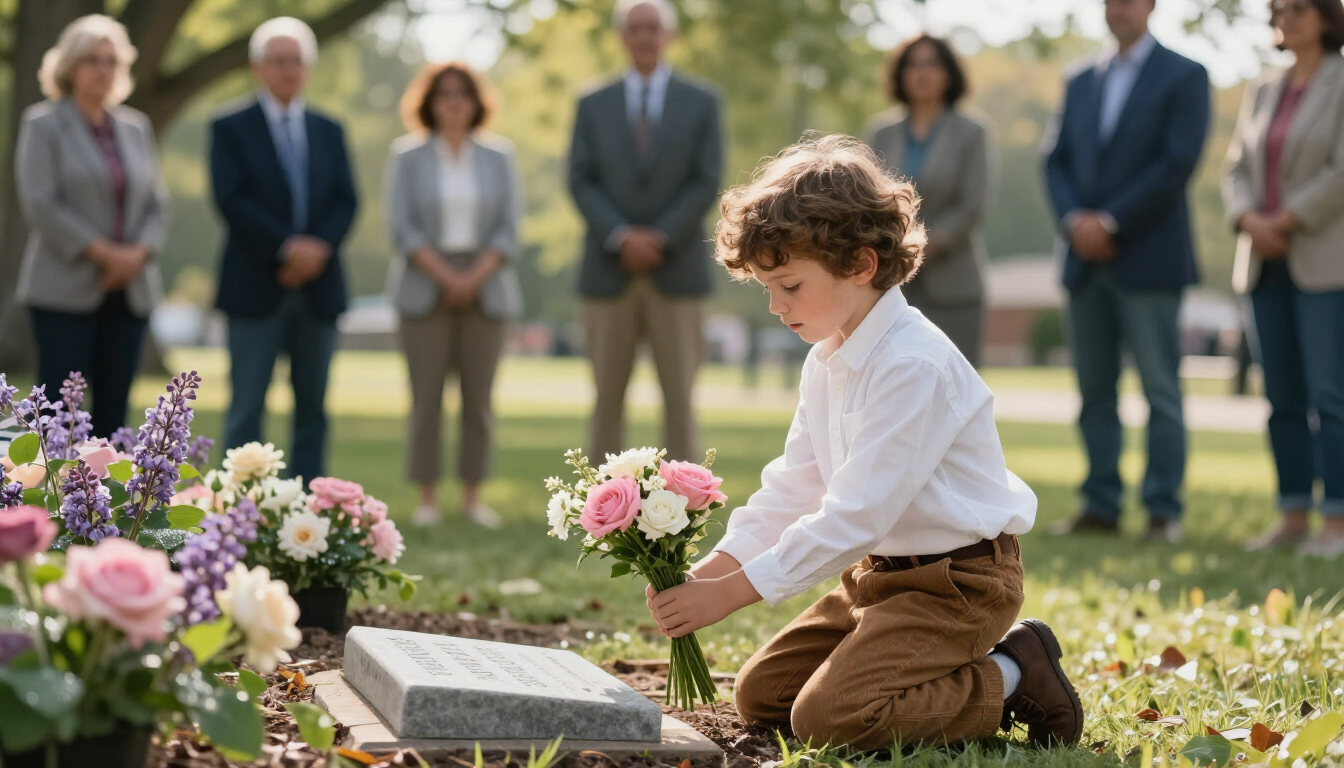
photorealistic child placing a flower at a peaceful memorial service respectful community gathering soft focus

Supporting a grieving child through the process

Grief in children often comes in waves. They may seem intensely sad one moment and be playing happily the next. This is a normal defense mechanism that allows them to process the loss in manageable doses. As a parent or guardian, your role is to be a steady presence, offering comfort whenever those waves of grief return.

Encourage them to express their feelings through drawing, writing, or storytelling. Sometimes, children find it easier to talk while they are engaged in another activity, like walking through one of our local parks or visiting a site listed in our Utah County Cemetery Directory . Always remind them that it is okay to feel however they feel, and that their questions are always welcome.

How can you maintain routines during a loss?

Consistency is a powerful tool for helping children feel secure during a time of upheaval. While the family schedule may naturally shift during funeral planning, try to keep bedtimes, meal times, and school routines as normal as possible. Routines provide a predictable structure that makes the world feel safer when everything else seems to have changed.

If you find that the logistics of planning are becoming overwhelming, consider how why plan ahead strategies can reduce stress for the entire family. Having a plan in place allows you to focus more on your children's emotional needs rather than administrative details during a crisis.

Summary and Practical Takeaways

Understanding how to talk to children about death is a journey of patience and empathy. By prioritizing honesty and using clear, age-appropriate language, you provide your child with the tools they need to navigate one of life's most challenging experiences. Remember that you do not have to have all the answers; simply being present and listening is often the most important support you can offer. Berg Mortuary remains a dedicated neighbor to the families of Provo, Orem, and Springville, providing the resources and care needed to honor every life with dignity.

  • Be Honest : Use literal terms like "died" to avoid confusion.
  • Be Patient : Expect questions to be repeated as the child processes the news.
  • Be Flexible : Allow children to participate in rituals only if they feel comfortable.
  • Keep Routine : Maintain normal schedules to provide a sense of security.
  • Seek Help : Reach out to contact us or visit our grief support page for professional resources.

Recent Posts

Compassionate funeral planning and transportation services in Utah.
April 3, 2026
Learn the essential steps for transporting a body to Utah or out of state. Explore legal requirements, airline logistics, and how Berg Mortuary manages the process.
Elegant cremation urn with flowers representing affordable services in Utah County.
April 3, 2026
Understand cremation costs in Utah County for 2026. Compare prices for direct cremation, memorial services, and visitations at Berg Mortuary in Provo, Orem, and Springville.
A respectful memorial service setting in Utah County
April 3, 2026
Master funeral etiquette with our comprehensive guide on what to say, wear, and do. Learn professional advice for honoring loved ones in Utah County at Berg Mortuary.
Peaceful cemetery landscape in Utah County with mountain views
April 3, 2026
Discover essential information about Utah County cemeteries, including locations in Provo, Orem, and Springville, burial rules, and what to expect when planning.
Official Utah legal documents and pen representing death certificate processing.
April 3, 2026
Learn the essential steps to obtain Utah death certificates, understand eligibility requirements, and discover how Berg Mortuary assists families in Provo and Utah County during this critical time.
April 3, 2026
How can I manage overwhelming grief daily?
A peaceful sunset over the Utah Valley mountains representing the peace of mind found in funeral pre-planning.
April 3, 2026
Learn the benefits of funeral pre-planning in Utah County. Our guide covers costs, service options, and how to protect your family from emotional and financial stress.